Partnering to ensure sustainable exit-pathways for participants of the Expanded Public Works Programme (EPWP)
Article by Tumelo Sekwele Pictures by Oageng Mathenje and Kagiso Mootane
The Expanded Public Works Programme (EPWP) recently held a Community of Practice (COP) summit at the Anew Hotel Convention Center, OR Tambo in Benoni, Johannesburg. The purpose of the summit was to explore the role of non-profit organisations (NPOs) in creating exit pathways and promoting sustainability within the EPWP.
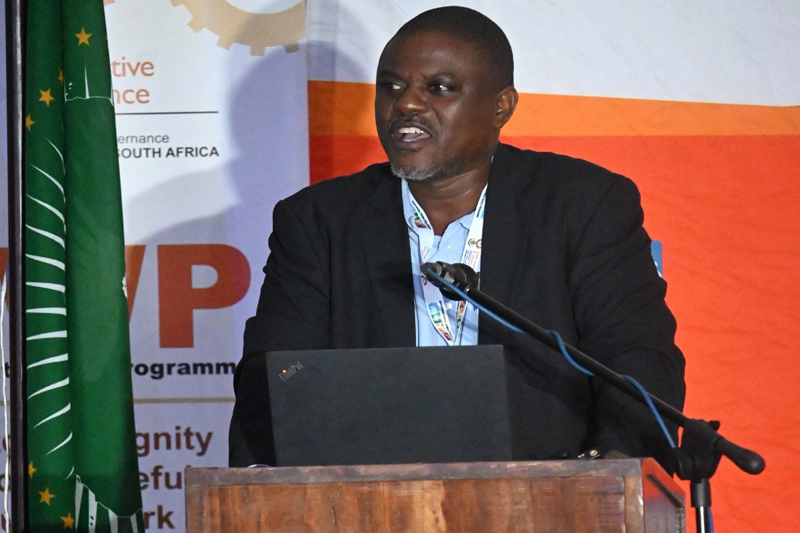
While delivering the summit’s purpose, the Deputy Director-General (DDG) for Governance, Risk, and Compliance (GRC), Mr. Lwazi Mahlangu, said that the summit was intended to share ideas and perspectives on how knowledge can help drive positive outcomes for citizens.
During the keynote address, the Deputy Minister of the Department of Cooperative Governance and Traditional Affairs (CoGTA), Dr. Dickson Masemola, highlighted the strategic collaboration between government and NPOs. He emphasised how these partnerships enable the programme to reach people on the ground and ultimately improve the socio-economic challenges faced by communities.
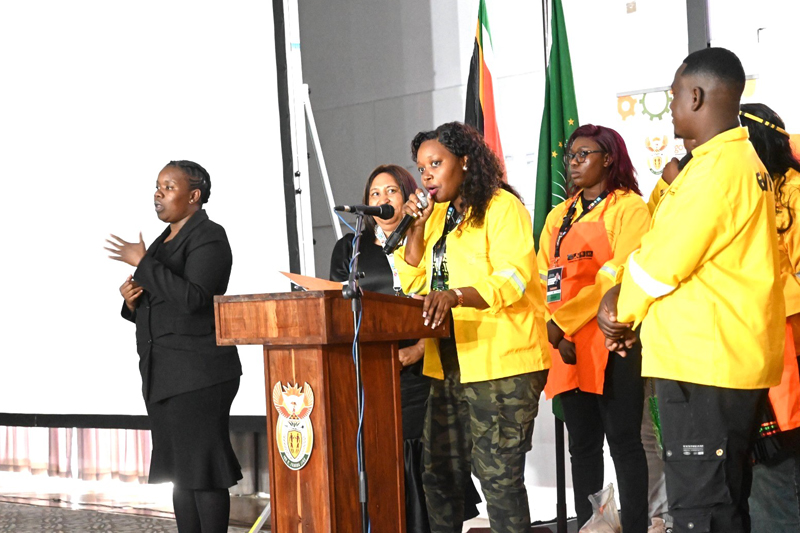
In conclusion, Dr. Masemola stressed the overall role of the EPWP, stating that the programme is inclusive and delivers dignity and hope for participants. He called on attendees to work together to build a programme that stands for transparency, opportunity, and respect — values that will ultimately work for everyone.
Acting Deputy Director-General (DDG) for EPWP, Mr. Ignitus Ariyo, highlighted the role of the Non-State Sector (NSS) under the current phase, including the creation of 923,718 opportunities, of which 218,563 were created by the non-state sector. He said: “The non-state sector has played a significant role in creating work opportunities for participants.” He noted its cost-effectiveness in creating 20,434 Full-Time Equivalent (FTE) opportunities during the 2024/25 financial year, and its inclusion of people with disabilities. Mr. Ariyo further explained the role of Enterprise Development in helping participants exit the programme by starting their own small, medium, and micro enterprises (SMMEs).
Ms. Cebisile Nyambe, Project Manager of the electronic waste programme (funded by Japan through the International Labour Organization (ILO) and located in Limpopo), shared that the programme aims to increase youth employment and improve electronic-waste management policy and framework. She added that the initiative raises community awareness and engagement on the safe disposal of e-waste. To date, the programme has employed 22 young people, including two cellphone repair technicians.
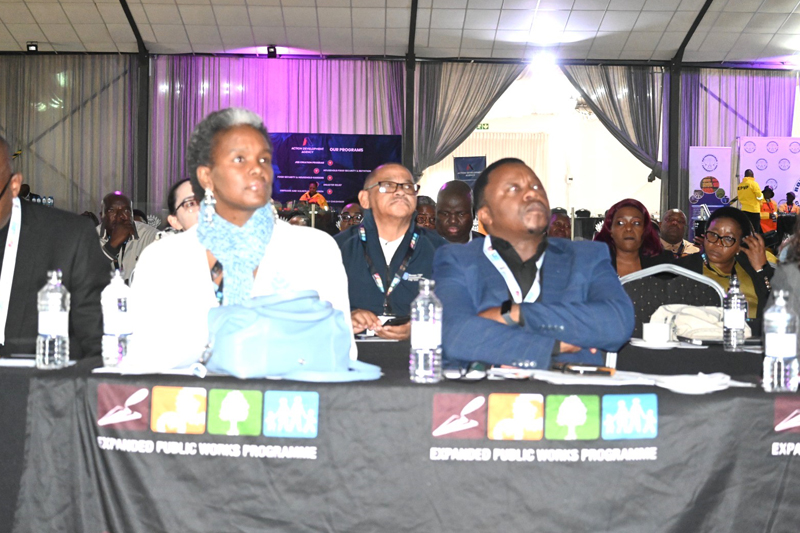
None- state sector is one of the EPWP sectors responsible for coodination of the NPO programme implemented through Independent Development Trust [IDT].
The EPWP NPO Programme remains a unique and valuable channel for reaching communities and catalysing local development. NPOs are more than delivery agents — they are embedded in communities and bring an understanding of local needs, enabling them to serve as catalysts for innovation, behavioural change, and sustained impact.
A participant from an NPO called Reach Out Community Projects in the Vaal, Mr. Mthokosizi Ndlovu, said: “Thank you EPWP and IDT for the work you do in our communities of empowering less privileged.” When he joined the programme he was working as a food gardener; today he is working as a centre manager. He further highlighted that he has started gas and consulting businesses respectively.
The summit was attended by representatives from national and local government.